
The Halo Effect: How First Impressions Shape and Deceive Our Minds
Discover the Halo Effect in psychology — how first impressions deceive, distort judgment, and influence choices in work, relationships, education, and daily life.
9/28/20252 min read
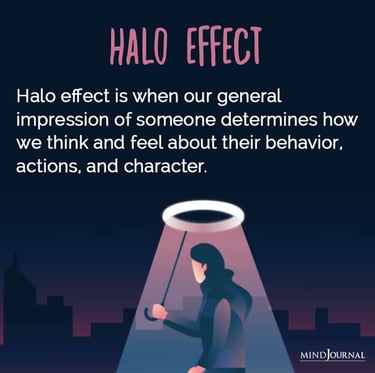

The Halo Effect: How First Impressions Shape and Deceive Our Minds
Have you ever trusted someone simply because they “looked confident” or admired a leader just because they spoke well? This isn’t always rational — it’s the Halo Effect, a psychological bias where one positive trait creates an overall favorable impression, often deceiving our judgment.
In this blog, we’ll decode the Halo Effect, its roots in psychology, real-life examples, and how awareness of this bias can protect us from making poor decisions.
What is the Halo Effect?
The Halo Effect is a cognitive bias where we attribute unrelated positive qualities to someone based on a single strong trait, often appearance, confidence, or charisma.
Example: If someone is physically attractive, we may assume they are kind, intelligent, or trustworthy — even without evidence.
Origin: The term was first coined by psychologist Edward Thorndike in 1920, who observed that people’s overall impressions influenced their ratings of soldiers’ traits.
Key Insight: First impressions are powerful, but they can deceive us into ignoring reality.
Everyday Examples of the Halo Effect
In the Workplace
A well-dressed employee may be perceived as more competent than others.
Managers may favor confident speakers over quiet but skilled workers.
In Marketing & Branding
Luxury packaging or celebrity endorsements make us believe a product is superior.
Popular influencers gain trust simply because of their image.
In Relationships
Physical attractiveness often leads us to assume positive traits like honesty or kindness.
Early charm can blind us to red flags in friendships or dating.
In Education
Teachers may assume attractive or articulate students are more intelligent, impacting grades and opportunities.
Why the Halo Effect Deceives Us
Shortcut Thinking → The brain loves efficiency. Judging based on one positive trait saves energy but sacrifices accuracy.
Emotional Bias → Positive emotions cloud rational evaluation.
Social Conditioning → Society often equates beauty, status, and confidence with success or goodness.
The Dark Side of the Halo Effect
Missed Opportunities → Overlooking talented people who don’t “look the part.”
Biased Hiring & Promotions → Creating unfair advantages for certain employees.
Unrealistic Expectations → Believing someone is flawless based on one trait leads to disappointment.
Manipulation → Marketers, leaders, or influencers can exploit the bias to gain trust.
Overcoming the Halo Effect: Practical Tips
Pause Before Judging → Ask yourself: Am I judging this person/product fairly, or just based on one trait?
Seek Evidence → Look for facts, skills, or behaviors instead of relying on appearances.
Diversify Perspectives → In hiring or decision-making, involve multiple evaluators.
Reflect on Bias → Keep a mental checklist: Am I being swayed by confidence, beauty, or branding?
How Understanding the Halo Effect Helps Personal Growth
By recognizing this bias, you:
Make fairer decisions in work, friendships, and relationships.
Develop critical thinking skills that protect you from manipulation.
Learn to value substance over appearance, leading to deeper connections and wiser choices.
Conclusion
The Halo Effect proves that first impressions can be dangerously deceptive. While a polished appearance or confident personality may attract us, true judgment requires looking deeper.
Awareness is the first step toward freedom. By decoding the Halo Effect, we not only see others more clearly — we also grow into better decision-makers in our professional, social, and inner worlds.