
The Bystander Effect: Why We Don’t Always Help
Explore the Bystander Effect in psychology — why people hesitate to help in emergencies, real-life examples, and how awareness empowers empathy and action.
10/3/20252 min read
The Bystander Effect: Why We Don’t Always Help
Have you ever seen someone in need but noticed that nobody stepped forward to help — including yourself? This strange hesitation is not laziness or lack of care. It’s a well-studied psychological phenomenon known as the Bystander Effect.
The Bystander Effect explains why individuals are less likely to intervene in an emergency when other people are present. In this blog, we’ll uncover why this happens, explore real-life examples, and learn how understanding it can help us become more proactive, compassionate individuals.
What is the Bystander Effect?
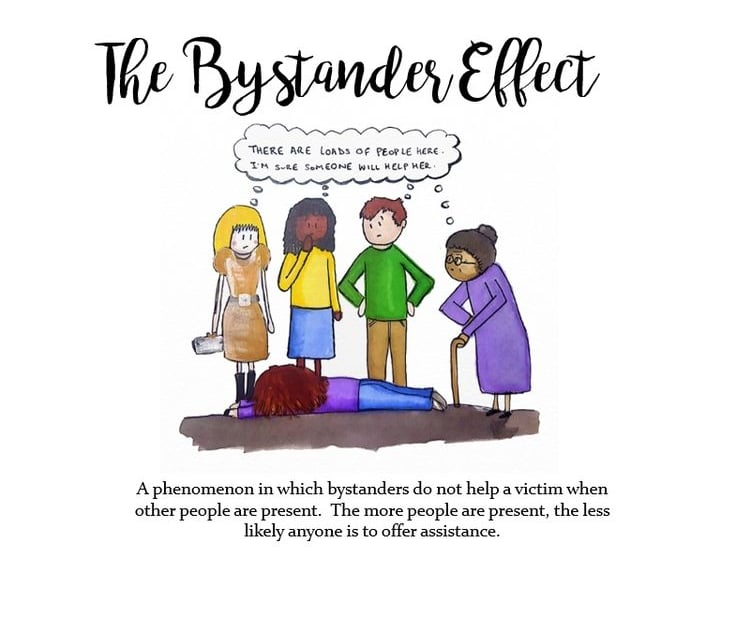
The Bystander Effect is the tendency for people to be less likely to help someone in distress when others are around.
Key Insight: The more people present, the less personal responsibility each person feels to act.
Why Does the Bystander Effect Happen?
Diffusion of Responsibility
In a crowd, responsibility feels “shared.” People assume someone else will take action.
Social Influence
Humans look to others for cues. If no one reacts, we assume the situation isn’t serious.
Fear of Judgment
People worry about overreacting or embarrassing themselves if help isn’t really needed.
The Case that Sparked Research
In 1964, the tragic murder of Kitty Genovese in New York City brought global attention to the Bystander Effect. Reports claimed dozens of witnesses did not intervene, though later accounts revealed fewer bystanders than initially thought.
Still, this case led psychologists John Darley and Bibb Latané to study the phenomenon in experiments — proving that people are less likely to act when others are present compared to being alone.
Real-Life Examples of the Bystander Effect
Accidents in Public Places → People hesitate, assuming others will step in.
Workplace Bullying → Colleagues stay silent to avoid conflict, waiting for someone else to speak up.
Online Harassment → On social media, thousands witness cyberbullying, yet only a few intervene.
How to Overcome the Bystander Effect
Acknowledge It → Awareness of this bias makes it easier to resist.
Take Ownership → Remind yourself: “If not me, then who?”
Act Quickly → Even small steps like calling emergency services can change outcomes.
Lead by Example → Once one person helps, others are more likely to follow.
Why It Matters for Growth
The Bystander Effect doesn’t just apply to emergencies — it also reflects how we act in our communities, workplaces, and relationships.
It challenges us to push beyond hesitation.
It reminds us that compassion requires courage.
It empowers us to create ripple effects of kindness and responsibility.
Conclusion
The Bystander Effect reveals how human behavior is shaped by social context. But by becoming aware of it, we can rise above the crowd’s silence, take action, and make a real difference.
The next time you witness someone in need, remember — one person’s courage can inspire many. And that person can be you.